
How to Use the Telegram Ads API: Functions, Budgets, and Alternatives
Last updated: October 2026
The official Telegram Ads API allows for the automated creation and management of sponsored messages. It has a starting price of 0.1 TON per 1,000 views (CPM) but requires a large budget and uses a specific set of functions documented on Telegram's core platform (blockmm.ai). This guide explains the technical realities of using the Telegram Ads API, comparing the official platform with third-party and Bot APIs.
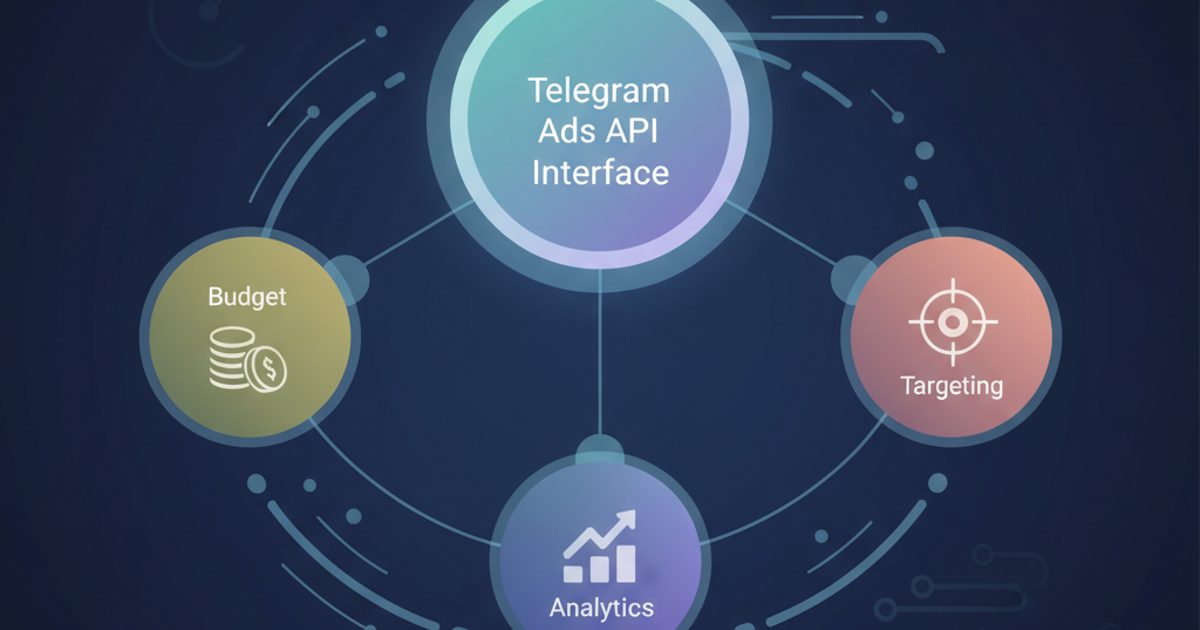
Telegram's Ads API is a tool for programmatically managing Sponsored Messages within Telegram's advertising platform. It is a restricted interface, primarily for large-scale advertisers who can meet significant budget requirements. Its main purpose is to automate ad creation, budget control, and performance analysis for posts in large public channels.
For developers, the differences between the Bot API, the core API (TDLib), and the Ads API can be confusing. This guide clarifies those distinctions, explains the technical and financial barriers, and details how to build ad features into your services.
What Is the Telegram Ads API (and What It Is Not)?
The Telegram Ads API is a specific, authenticated interface for managing Sponsored Messages on Telegram's ad platform. It is not a public, open-registration API. Access is limited and generally reserved for advertisers who meet high budget levels. The API's primary function is to automate ad tasks for sponsored posts that appear in public channels on a platform with a massive audience.
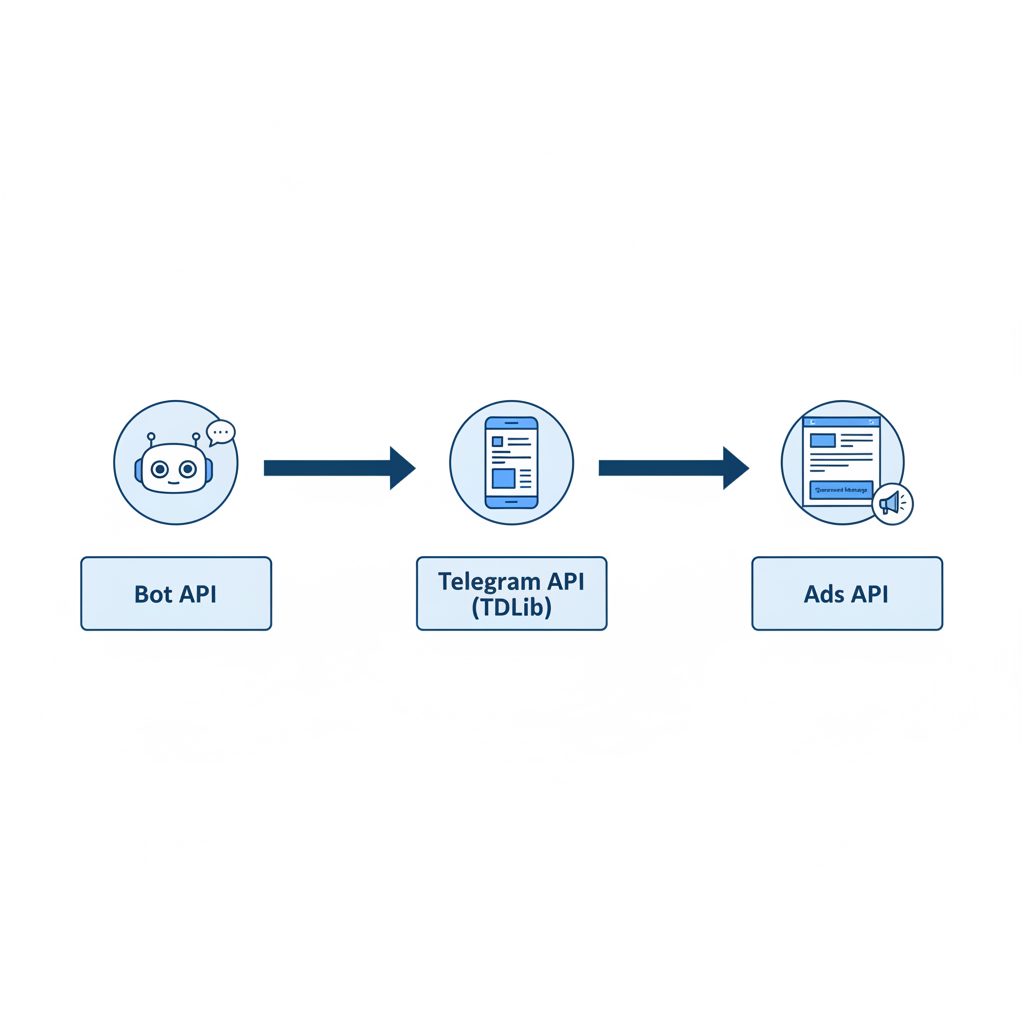
It is essential to distinguish the Ads API from other Telegram APIs that developers often use:
- Bot API: This is the most common API for creating and managing Telegram bots. Bots can send messages, manage groups, and offer interactive services. However, the Bot API has no functions for creating official Sponsored Messages. You cannot run ad campaigns through a bot.
- Telegram API (TDLib - Telegram Database Library): This is a powerful library for building custom Telegram clients. While it interacts with many features of the Telegram ecosystem, it is not designed for placing ads. Its purpose is client development, not ad management.
The Telegram Ads API is a closed system for high-budget advertisers to manage Sponsored Messages programmatically. It is functionally separate from the public-facing Bot API and the TDLib client development library.
In short, if your goal is to place an official ad with the "sponsored" label, the Bot API and TDLib are the wrong tools. You must use the Telegram Ad Platform, either through its web interface or its restricted API.
How Does the Official Ads API Work?
Direct access to the Telegram Ads API is not available through a simple sign-up. It is a gated system that requires manual approval from Telegram and a serious financial commitment. For example, the process is designed for major brands and advertising agencies, not small businesses.
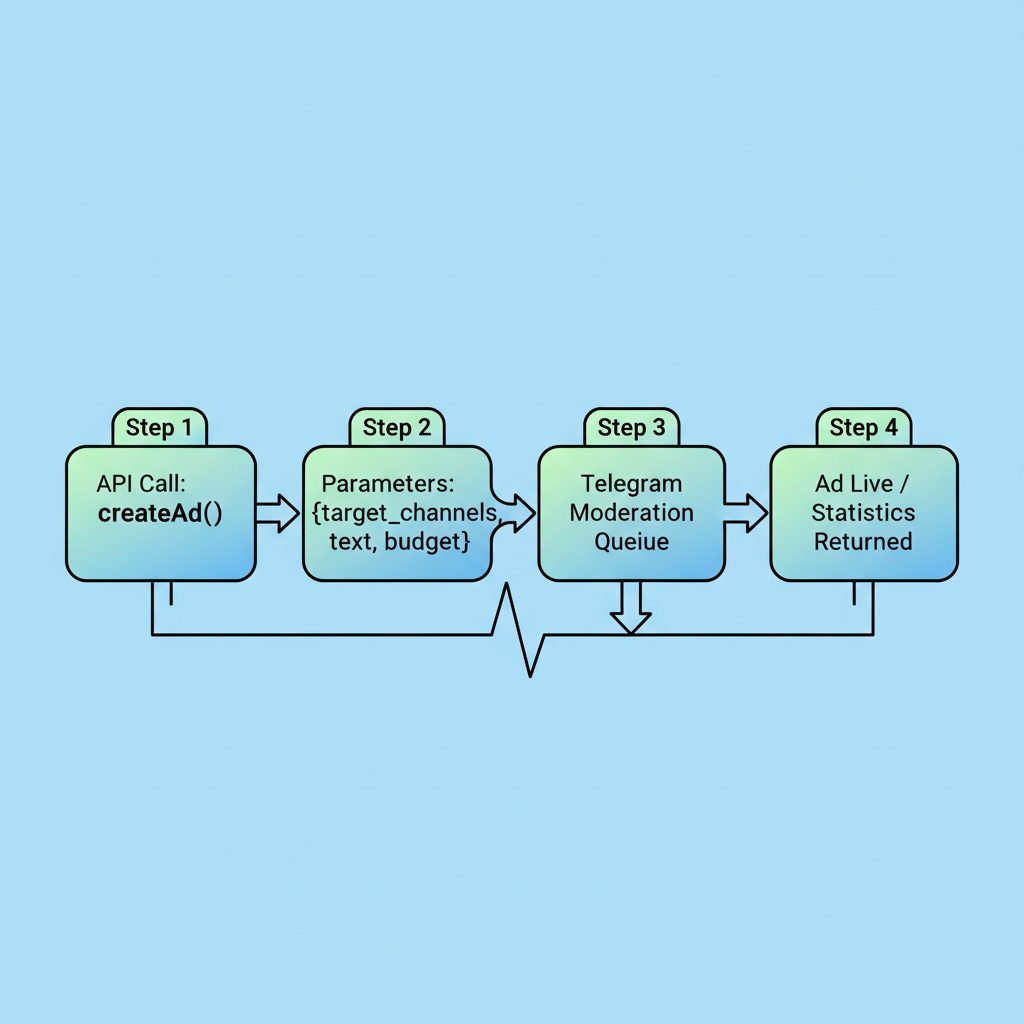
Once access is granted, interaction occurs via MTProto, Telegram's custom protocol, not a simple REST API. Developers must use libraries that can handle MTProto requests to call specific ad-related methods. The core functions revolve around creating, updating, and retrieving ad statistics.
Key API methods include:
ads.createAd: Submits a new ad, targeting parameters, and budget.ads.updateAds: Modifies existing ad campaigns.ads.getAdsAll: Retrieves a list of all ads associated with the account.ads.getAdsStatistics: Fetches performance data, such as views, for a specific ad.
These methods are part of the platform's core functionality, as documented in the official MTProto schema. The technical barrier of MTProto, combined with the high financial entry point, makes direct API access impractical for most. As a result, this has created a market for Telegram ads service providers who act as intermediaries.
Official vs. Third-Party API Access: A Comparison
For developers and agencies, the choice is between seeking direct access to the official API or using a third-party reseller API. A reseller API handles the complexity and high cost of the official platform, providing a more accessible entry point. The table below outlines the key differences.
| Feature | Official Telegram Ads API | Third-Party Reseller API (e.g., TgFather) |
|---|---|---|
| Minimum Budget | High (e.g., a €2M minimum spend for direct access) (blockmm.ai) | Low (Pay-per-campaign or small prepay) |
| Access Method | Manual Approval, MTProto Protocol | Instant Sign-up, REST API |
| Setup Time | Weeks or Months | Minutes |
| Targeting Options | Channel Topics, Languages, Specific Channels | Same as official, via simplified interface |
| Support | Dedicated Account Manager (for top tiers) | Ticketing System, Developer Docs |
| Ideal User | Large Corporations, Major Ad Agencies | SMM Panels, Developers, Small Agencies |
Integrating Programmatic Ads: The TgFather API Approach
For developers who need to integrate Telegram ad placement into their applications without meeting the steep official requirements, a reseller API is the practical solution. The TgFather API serves this purpose by acting as a service layer on top of the official platform.
Our API allows you to programmatically place official Sponsored Messages on Telegram through a simple, documented REST interface. Instead of dealing with MTProto and a massive budget, you can manage ad orders through our system with a much lower financial commitment. This approach is designed for resellers and developers who want to offer ad services to their own users.
To be clear, the TgFather API is not the raw Telegram Ads API. It is a service that executes ad orders on your behalf on the official platform. The benefits are a lower barrier to entry, combined billing for multiple services, and a straightforward integration. This model is ideal for anyone building a multi-service social media management tool. For a deeper look, see our guide on the Telegram Reseller API.
What Are the Key Limitations and Costs?
Understanding the constraints of Telegram's ad system is critical before investing in development. The platform's privacy-first approach creates significant limitations compared to other social networks.
Advertising Costs
Your costs will vary based on your access method.
-
Official Platform: This route requires a large initial financial commitment. For example, Telegram has previously required a €1 million deposit for agencies to gain access. The ads themselves run on a CPM model.
-
Reseller APIs: These services remove the need for a large deposit. You pay for your campaigns as you go, but the CPM will include the provider's margin. This is a tradeoff for greater accessibility and lower upfront cost.
For a general overview of API-related costs on the platform, our guide on the Telegram API price provides additional context.
Platform Limitations
- Privacy-First Targeting: This is the most significant difference from platforms like Meta. You cannot target users based on personal data. Instead, targeting is limited to the context of public channels. You can target users (by country, language, topics, device), specific channels (with over 1,000 subscribers), specific bots, or search queries (Adsly).
- Strict Content Policies: Telegram heavily restricts the types of content for advertising. Prohibited categories include deceptive products, gambling, malware, and political content. Telegram's team manually moderates all ads, and approval is not guaranteed. You can read the full list of rules on the official ad platform.
- API Rate Limits: All APIs impose rate limits to prevent abuse. While Telegram's official rate limits are not public, any reseller API will have its own clear limits on how many requests you can make per minute or hour.
How Should I Prepare for Integration?
Before committing resources to an integration project, evaluate these key points to see if the Telegram Ads API, direct or via a reseller, fits your goals.
- Assess your budget. Can you meet the high minimum deposits and spend required for direct access? If not, a reseller API is your only viable path for automation.
- Review Telegram's Ad Policies. Carefully read the content restrictions on the
promote.telegram.orgsite. Ensure your product or service is compliant to avoid wasted effort. - Define your target audience. Can you effectively reach your audience using Telegram's broad topic- and channel-based targeting? If you need detailed demographic targeting, this is not the right platform.
- Evaluate your technical capacity. Does your team have the expertise to work with the MTProto protocol? Or is a standard REST API from a provider like the TgFather API a more practical route?
- Consider the alternatives. For certain objectives, buying official sponsored messages through a managed service or negotiating private ad placements directly with channel owners can offer a better return than programmatic ads.
What to Do Next
Ready to get started with programmatic Telegram ads? Here are the four essential steps to take now:
- Estimate Your Budget: Use the 0.1 TON minimum CPM to forecast potential campaign costs (blockmm.ai). Decide if your budget aligns with direct access or if a reseller is a better fit.
- Choose Your Path: Based on your budget and technical resources, decide between pursuing direct API access or integrating with a reseller API.
- Review API Documentation: If you choose a reseller, study their API documentation to understand the endpoints, request formats, and authentication methods required for integration.
Frequently Asked Questions
Can I use the Telegram Bot API to run ads?
No. The Bot API is for creating interactive bots and managing messages. It has no functions to create, manage, or pay for Sponsored Messages on the official Telegram Ad Platform. Advertising requires using the ad platform directly or through an authorized intermediary.
What is the minimum price for Telegram ads via API?
Direct API access requires a significant financial commitment. For example, Telegram has required deposits of €1 million from agencies. The ads themselves are priced on a CPM (cost per thousand views) model starting at €2. Reseller APIs offer a much lower entry point, allowing you to run campaigns with smaller, flexible budgets.
Is there an official Python library for the Telegram Ads API?
No, Telegram does not provide official client libraries for the Ads API in languages like Python or JavaScript. Direct integration requires working with the MTProto protocol, which is a complex task. This technical barrier is a primary reason many developers choose reseller APIs that offer standard REST endpoints.
How is the Telegram Ads API different from the Meta Ads API?
The Telegram Ads API is much more limited. It lacks the user-level targeting based on personal data that defines the Meta Ads API. Telegram's targeting is privacy-focused, based only on public channel topics and languages. The API is also far less accessible to the public.
Can I target users directly with the Ads API?
No. Telegram's advertising system protects user privacy. You cannot target individual users or any of their personal information. You can only target the audience of public channels with more than 1,000 subscribers, either by selecting specific channels or by choosing their general topic.